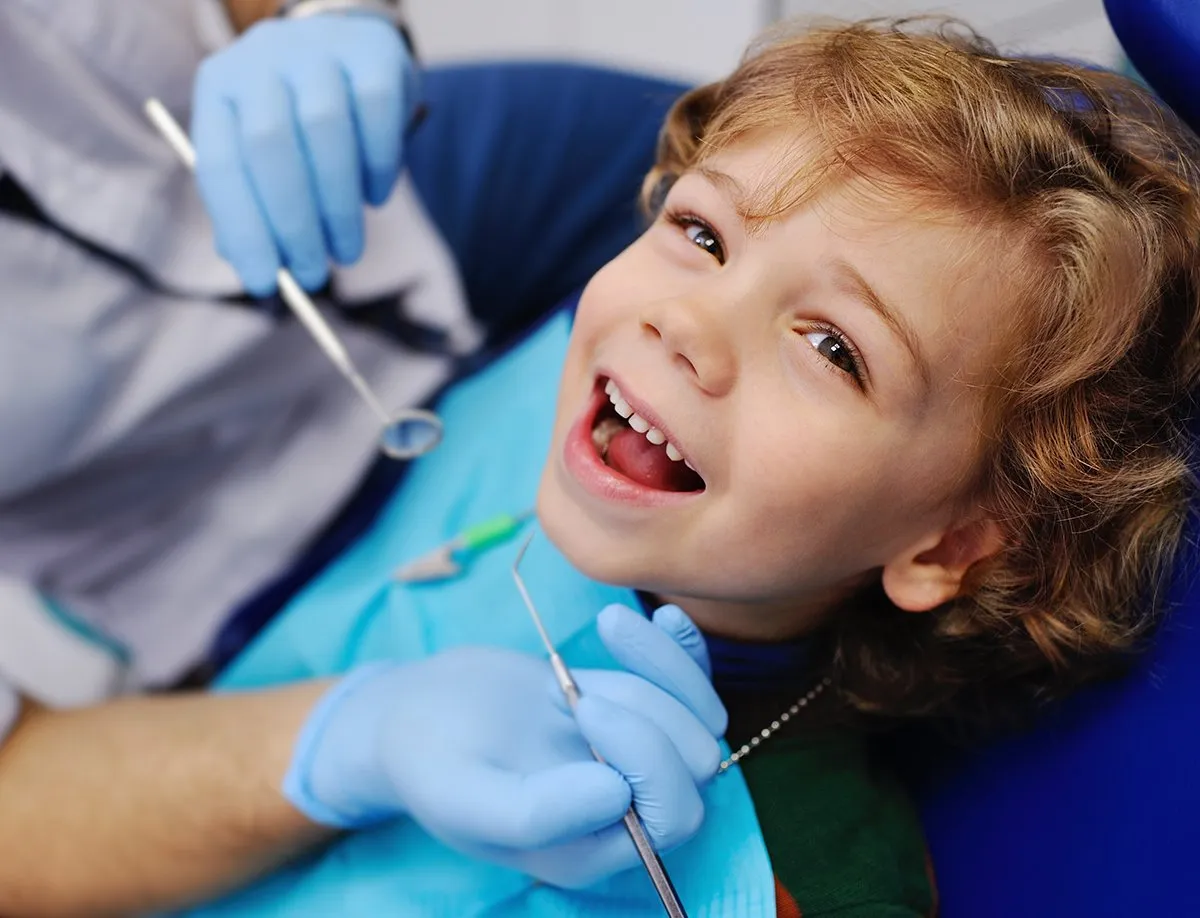
Image illustrates a child’s dental visit. Examination and cleaning are tailored to each child’s needs.
Regular Dental Checkups and Cleanings for Children
Regular dental checkups help monitor children’s oral health and development. Professional cleaning may be recommended according to each child’s needs. At Experteeth Dental, we focus on children’s dental well-being, helping them navigate various oral challenges during their growth and development. Regular visits not only allow for the timely identification and prevention of potential issues but also help children build positive interactions with their dentist, which may help reduce dental anxiety.
Why Should Children Have Regular Dental Checkups?
Early Detection and Prevention: Identifying potential issues with teeth and gums early can help prevent cavities and other oral problems.
Developing Good Habits: Establishing proper brushing and oral care habits to support long-term dental health.
Building Trust: Regular interactions with the dentist can reduce fear and build trust between the child and the dental professional. Your dentist will recommend a checkup interval based on your child’s oral health and risk of dental problems. Professional cleaning is provided when clinically indicated and may not be needed at every visit.
What the Procedure Includes
Comprehensive Assessment: During the first visit, the dentist will evaluate the child’s dental growth, alignment, and gum health.
Oral Health Examination: Assessing the condition of the teeth, gums, and jawbone.
Teeth Cleaning: Checking the teeth, gums and bite. X-rays or other investigations may be recommended when clinically indicated.
Education and Guidance
Brushing and Flossing Techniques: Our dental team will show children and their parents or carers age-appropriate brushing and flossing techniques, and discuss toothpaste, diet and daily oral care.
Proper Brushing Method: Helping achieve effective teeth cleaning with correct brushing techniques.
Flossing Instructions: How to use dental floss to maintain clean teeth.
Through regular dental checkups and cleanings, children’s oral health can be enhanced, and good oral care habits can be established, which may help support future dental health.
Frequently Asked Questions
Do children need dental cleanings?
Some children benefit from professional cleaning to remove plaque, tartar or stains. Your dentist will assess whether cleaning is needed and choose an approach suited to your child’s age, oral health and ability to tolerate treatment. Cleaning is not necessarily required at every checkup.
How often should children have dental checkups?
Your dentist will recommend a checkup interval based on your child’s age, oral health and risk of dental problems. Six-monthly visits may be appropriate for some children, while others need a different schedule. Arrange an earlier assessment if your child develops pain, swelling, an injury or another dental concern.
How should I care for my child’s teeth at home?
• Start Early: Begin cleaning your child’s teeth as soon as the first tooth appears, using a small, soft-bristled toothbrush.
• Help with Brushing: Brush twice daily. Parents or carers should assist until the child can clean effectively, and continue to supervise as needed.
• Toothpaste: For children under 18 months, use water unless your dentist advises otherwise. From 18 months to 5 years, use a pea-sized amount of low-fluoride children’s toothpaste. From 6 years, use standard fluoride toothpaste. Individual advice may differ according to decay risk. Encourage children to spit out toothpaste rather than swallow it, and avoid rinsing after brushing.
• Flossing: Begin cleaning between teeth when they touch. Ask your dental team to demonstrate an appropriate technique.
• Food and Drinks: Limit frequent sugary snacks and drinks. Offer water between meals and a varied, balanced diet.
• Sealants and Fluoride: Fissure sealants or professional fluoride treatment may be recommended after assessment of your child’s teeth and decay risk; they are not required solely because a child reaches a particular age.
• Sports: Use an appropriately fitted mouthguard for activities with a risk of dental injury.
• Oral Habits: Discuss persistent thumb-sucking, dummy use or concerns about tongue posture with your dentist. Advice depends on your child’s age and dental development.
• Dental Visits: Arrange the first dental visit when the first tooth appears or by the first birthday, and follow the review schedule recommended for your child.
• Baby Teeth: Seek dental advice for pain, swelling, injury or visible changes in baby teeth rather than waiting for them to fall out.
 English
  Chinese