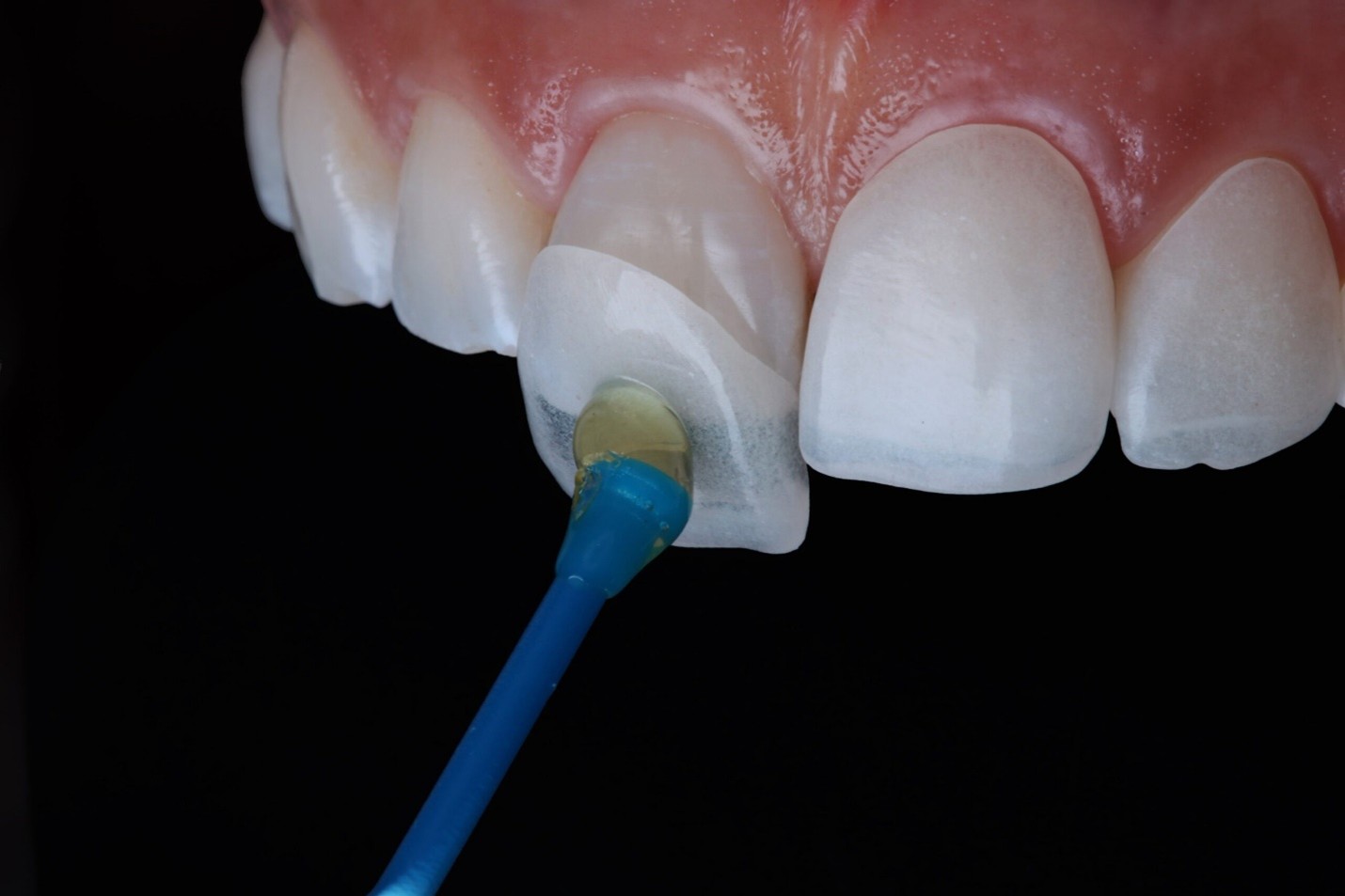
Image used to illustrate a veneer-related procedure, not a promised treatment result. The preparation, material, appearance and outcome depend on individual assessment.
Porcelain Veneers - Change the Look of Your Smile Explore Your Options with Our Custom Veneers
At Experteeth Dental Group, we understand that your smile is uniquely yours. Our porcelain veneers offer a custom option to change your teeth’s appearance; your dentist will discuss the risks and alternatives with you.
What Are Porcelain Veneers?
Porcelain veneers are thin, custom-made ceramic coverings bonded to the front surfaces of selected teeth. They may change the appearance of discolouration, small chips, gaps or tooth shape. Veneers can mask some minor alignment concerns but do not move teeth or correct the bite in the way orthodontic treatment can. Suitability depends on the condition of your teeth, gums and bite.
Why Choose Our Porcelain Veneers?
Aesthetic Options
Our veneers are crafted from dental-grade porcelain designed to mimic the translucency and appearance of natural tooth enamel, aiming to blend with your existing teeth.
Personalized Treatment
We assess your teeth, gums and bite and discuss your preferences. Scans, impressions or a mock-up may be used where appropriate. Any preview is a planning aid and does not guarantee the final appearance.
Potential Benefits
Veneers may change tooth colour and shape or mask selected small chips and gaps. The result depends on the underlying teeth and treatment design; veneers are not suitable for every damaged tooth.
The Veneers Procedure
Consultation & Planning
We assess your oral health, bite and reasons for considering veneers. We discuss suitable options, including whitening, composite bonding, orthodontics or no treatment where appropriate, together with risks, likely outcomes, maintenance and costs. Scans or impressions may be taken as needed.
Preparation
Preparation may involve removing tooth enamel. Any removal of tooth structure is irreversible. Possible problems include sensitivity, gum irritation, chipping, fracture or detachment of a veneer, and decay around its edges. Veneers do not last indefinitely and may need repair or replacement, with further treatment and costs over time. Your dentist will explain the risks relevant to your teeth.
Laboratory Creation
Your veneers are made in a dental laboratory. Production commonly takes around two to three weeks, although timing varies. Temporary veneers may be provided if needed while the final veneers are being made.
Placement & Adjustment
Your dentist checks the veneers’ fit, appearance and bite before final bonding. Adjustments or further appointments may be needed, and follow-up advice will be provided.
Frequently Asked Questions
What should I do if I experience gum irritation?
Gum irritation, redness or bleeding can have several causes, including plaque build-up, the veneer margins or residual cement. Contact the practice for assessment, particularly if symptoms persist or worsen. Treatment depends on the cause.
Is there an adjustment period for veneers?
Veneers may feel unfamiliar initially, and some sensitivity or mild discomfort can occur. The adjustment period varies. Contact your dentist if your bite feels uneven or you develop pain, persistent discomfort or difficulty chewing; these symptoms should not simply be ignored while waiting to adjust.
Are there dietary restrictions with veneers?
Avoid biting ice, hard sweets or other very hard objects, and do not use your teeth to open packaging. Cut hard foods into smaller pieces rather than biting them with veneered front teeth. Follow any additional instructions for temporary veneers.
Are porcelain veneers suitable for everyone?
No. Decay, gum disease, limited enamel, significant bite problems or tooth grinding may affect suitability and increase the risk of complications. Your dentist will assess these factors before recommending treatment. Less invasive options, or no treatment, may be more appropriate depending on your concerns and oral health.
How should I care for my veneers?
Brush twice daily with fluoride toothpaste and a soft-bristled toothbrush, and clean between your teeth daily. Follow your dentist’s advice about suitable products and review intervals. If you grind or clench your teeth, discuss whether additional protection is appropriate.
What if my veneer chips or breaks?
Contact the practice if a veneer chips, cracks or comes off. Avoid biting on the affected tooth and keep any detached veneer or fragment. Do not try to glue it back yourself. Your dentist will assess whether polishing, repair, rebonding or replacement is appropriate.
Will my insurance cover veneers?
Porcelain veneers are typically considered cosmetic procedures and may not be covered by standard dental insurance plans. We recommend checking with your insurance provider directly regarding coverage for your specific situation. Ask for a written treatment estimate and confirm any benefits and out-of-pocket costs with your insurer before proceeding.
 Chinese
 English